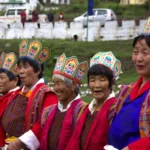

The Black-Necked Crane Festival is a unique annual celebration held in the beautiful Phobjikha Valley of Bhutan. Unlike Bhutan’s religious Tshechu festivals, this is a secular festival dedicated to welcoming the arrival of the endangered black-necked cranes and raising awareness about their conservation.
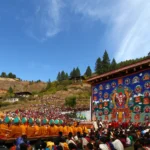
Held at the courtyard of the historic Gangtey Monastery, the festival brings together local communities, schoolchildren, conservationists and visitors for a day of cultural performances, traditional activities and environmental education.
About the Black-Necked Crane Festival
The festival marks the arrival of black-necked cranes in Phobjikha Valley, one of Bhutan’s most important winter habitats for these magnificent migratory birds.
The cranes typically arrive in Bhutan during the winter season and remain in their wintering areas until they return north. In Phobjikha, their arrival is celebrated as a special event and is closely connected with local beliefs and the community’s commitment to protecting their habitat.
The festival traditionally takes place around 11 November, although visitors should check the current annual programme before planning their trip.
Where Is the Festival Held?
The Black-Necked Crane Festival is held at Gangtey Monastery (Gangtey Goenpa) in the Phobjikha Valley, Wangdue Phodrang.
The valley is a spectacular high-altitude wetland surrounded by mountains and is an important wintering ground for black-necked cranes.
Its peaceful landscape, traditional villages and rich biodiversity make Phobjikha an excellent destination for nature and cultural tourism.
Festival Highlights
Black-Necked Crane Performances
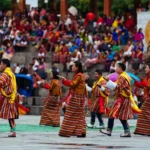
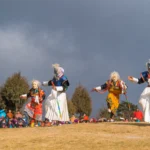
One of the most charming features of the festival is the participation of local children dressed in crane costumes.
They perform dances inspired by the movements and behaviour of the birds, creating an entertaining and educational experience for visitors.
Traditional Cultural Performances
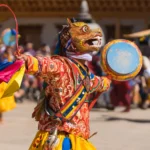
The festival features traditional Bhutanese songs, dances and cultural performances by local communities and schoolchildren.
These performances help connect the conservation message with Bhutan’s living cultural traditions.
Traditional Archery
Archery, Bhutan’s national sport, is another important part of the celebration. Local people participate in traditional archery competitions, turning the festival into an opportunity for community members to come together and celebrate.
Conservation Awareness
One of the festival’s main objectives is to increase awareness of the importance of protecting black-necked cranes and their natural habitat.
The festival helps visitors understand the relationship between the cranes, the Phobjikha wetland and the local communities whose livelihoods depend on the valley.
Why Are Black-Necked Cranes Important to Bhutan?
The black-necked crane is a globally threatened species and an important part of Bhutan’s natural heritage.
The birds spend their winters in several areas of Bhutan, including Phobjikha Valley, Bumdeling and parts of Bumthang. Their presence is closely associated with healthy wetland and agricultural ecosystems.
For local communities, the arrival of the cranes is also culturally significant. Bhutanese traditions associate their arrival with good fortune and a good harvest.
Best Time to See Black-Necked Cranes
The best opportunity to see black-necked cranes in Phobjikha is during the winter months.
The birds generally arrive from their northern breeding grounds in autumn and remain in Bhutan through winter before migrating north again. Bhutan Tourism notes that they can typically be observed in the Gangtey Valley from November to mid-February.
The exact timing can vary depending on migration patterns and weather conditions.
Why Visit the Black-Necked Crane Festival?
The festival is ideal for travellers interested in:
- Wildlife and birdwatching
- Conservation
- Bhutanese culture
- Nature tourism
- Photography
- Community-based tourism
- Traditional music and dance
- Sustainable travel
Unlike a traditional Buddhist Tshechu, the Black-Necked Crane Festival combines nature conservation with local culture and community celebration, making it a distinctive experience in Bhutan.
Travel Tips
Plan around the festival date: The main celebration is generally held around 11 November, but confirm the current year’s schedule before travelling.
Bring binoculars: They are useful for observing cranes from a respectful distance.
Dress warmly: Phobjikha can be cold during the winter season.
Respect wildlife: Do not approach, feed or disturb the cranes.
Book accommodation early: The valley can become busy around the festival.
Allow extra time: Staying for a few days allows you to experience the festival, birdwatching and the surrounding valley rather than making a short visit.
Experience Bhutan’s Wildlife and Culture
The Black-Necked Crane Festival is a celebration of one of Bhutan’s most treasured migratory birds and the communities that help protect its habitat.
With colourful performances, traditional archery, local participation and opportunities to observe cranes in their natural environment, the festival offers a memorable combination of Bhutanese culture, wildlife and conservation.
For nature lovers and cultural travellers, visiting the Black-Necked Crane Festival in Phobjikha Valley is a wonderful way to experience a different side of Bhutan.